jueves, 21 de mayo de 2009

Links

You can see some games, quizes or fun facts at

See webpages about porbability at

Other programs used:

Bibliography


Lesson 3: Testing the Law of large numbers


This lesson will be teached through problem solving.
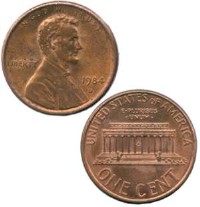
A. We will test with the binomial probabilities of the toss of a coin. You can use the probability simulator of a graphic calculator, toss the coins or follow this link:
http://www.subtangent.com/maths/flash/probsim.swf
1. Toss a coin 10 times. Record the outcomes and calculate the probability.
2. Toss it 10 times more. Add the outcomes to the ones of A.1. Calculate the experimental probabilities.
3. Now do it 50 times more and add the outcomes to the previous ones. Calculate the probabilities.
4. What is the theoretical probability of tossing a coin? Do you notice that each time that the experimental probabilities are closer to the theoretical?
B. Juan tossed the coin 20 times and got HTHTHHTTTHHTHTTTTTHT? What is the probability of getting heads? Tails?
1. What can Juan do to make the probabilities closer to one half? Why?

lunes, 18 de mayo de 2009

Lesson 2: Finding theoretical probabilities with area models


Juan is calculating the probabilities of getting two room A and B. For this he will use an are model in which the probabilities are shown by the fractions they represent. his result is shown at the left.
P(A)=1/4+1/8=2/8+1/8= 3/8
P(B)=1/4+1/4+1/8=4/8+1/8=5/8

jueves, 14 de mayo de 2009

Lesson 1:Theoretical Vs. Experimental Probabilities


Theoretical probabilities: probability obtained by analyzing a situation.
Example: The probability of getting 6 in normal dice is 1/6
Binomial probability: the probabilities of getting one out of two outcomes like that of tossing a coin.

Experimental probability: probability calculated from the results of an experiment.
Example: If you throw the number cube 12 times and your results are 1-3-2-1-1-1-4-2-1-3- 2-5 the experimental probability of getting a 1 is 5/12
Law of large numbers: states that are more times you do an experiment as closer the theoretical and experimental probabilities are.

Answer to the following exercises printing them following this link

Project Introduction


Hi, I am Mauricio Bustamante. As a student I am very sucssessful in math. I do this project because our math and computers teachers assigned it to us. I will try to explain as much as I can in this blog. I learned with the Connected Mathematics Pearson program so you will see links to their pages and information found there.

For this project I will supose I am a math teacher that was hired by Edhelper.com to create a blog where I should teach probability and answer to the questions in the comments. The whole web will be my audience. This may include teachers, students and parents.

I will be using Microsoft Office Excel and this blog. Also I will use my knowledge in macromedia frehand to create some vissual exercises. I hope you enjoy my blog.